
Skip to content

MA3-3DS-01: 3D objects, prisms and pyramids resources for Years 5–6

MA3-3DS-01A student visualises, sketches and constructs three-dimensional objects, including prisms and pyramids, making connections to two-dimensional representations.

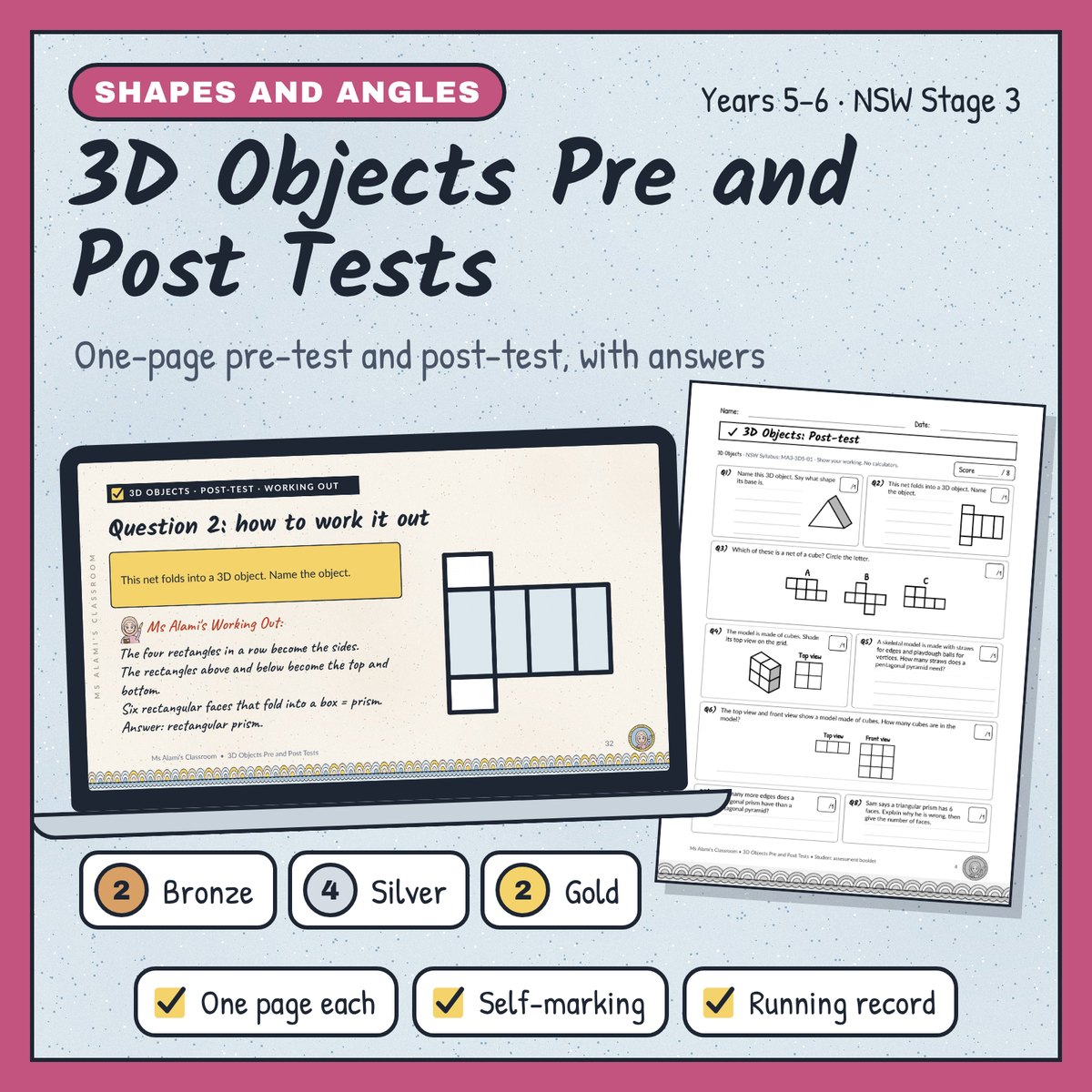
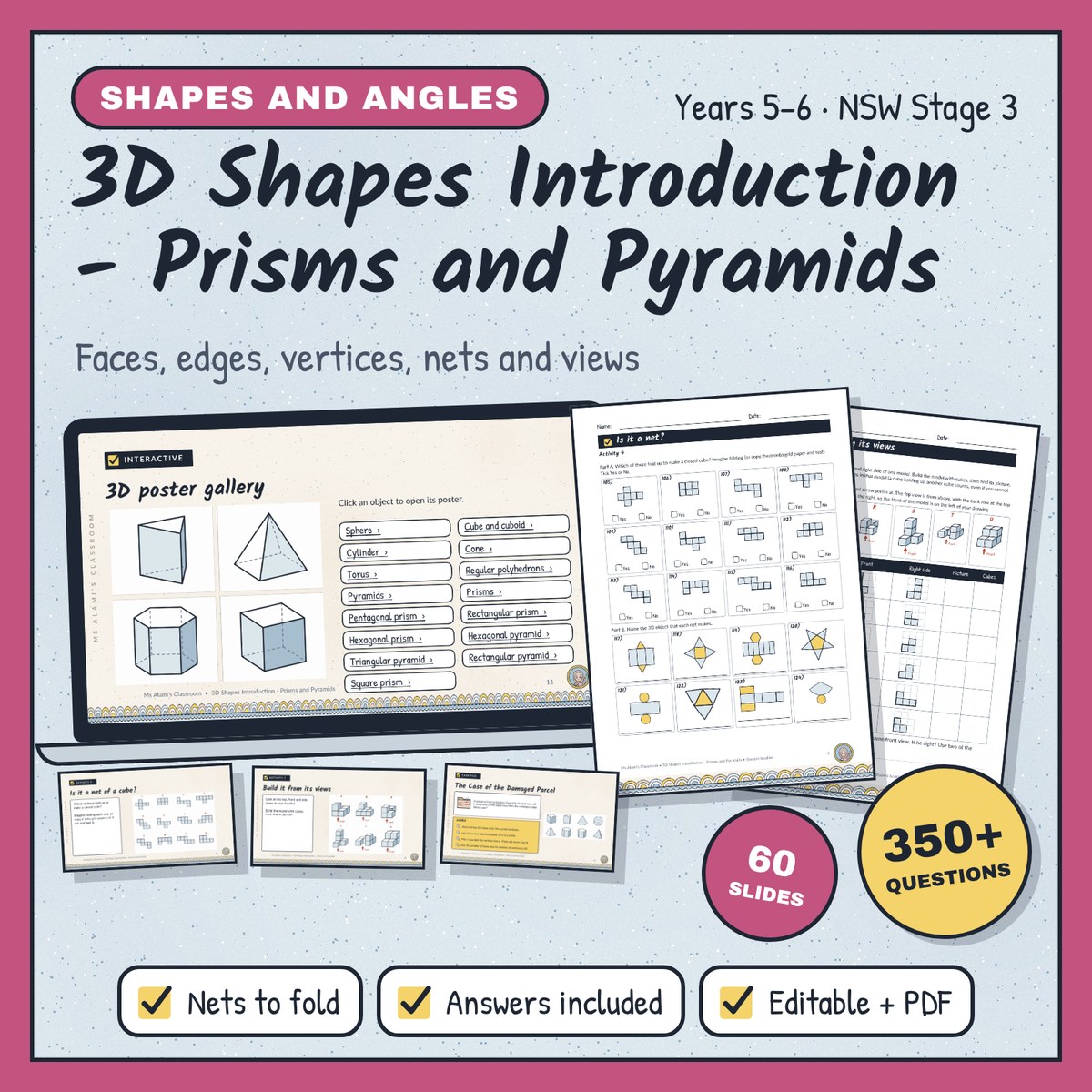
Students name prisms and pyramids by their base, count faces, edges and vertices, match objects to their nets, and sketch top, front and side views.

Outcome from the NSW Mathematics K–10 Syllabus (2022), Stage 3 measurement and space. © NSW Education Standards Authority.

Resources that teach MA3-3DS-01

Teaching guides for 3d objects, prisms and pyramids

Questions teachers ask

What is the difference between a prism and a pyramid?

A prism has two identical, parallel bases joined by rectangles. A pyramid has one base and triangles that meet at a point called the apex.

More measurement and space outcomes