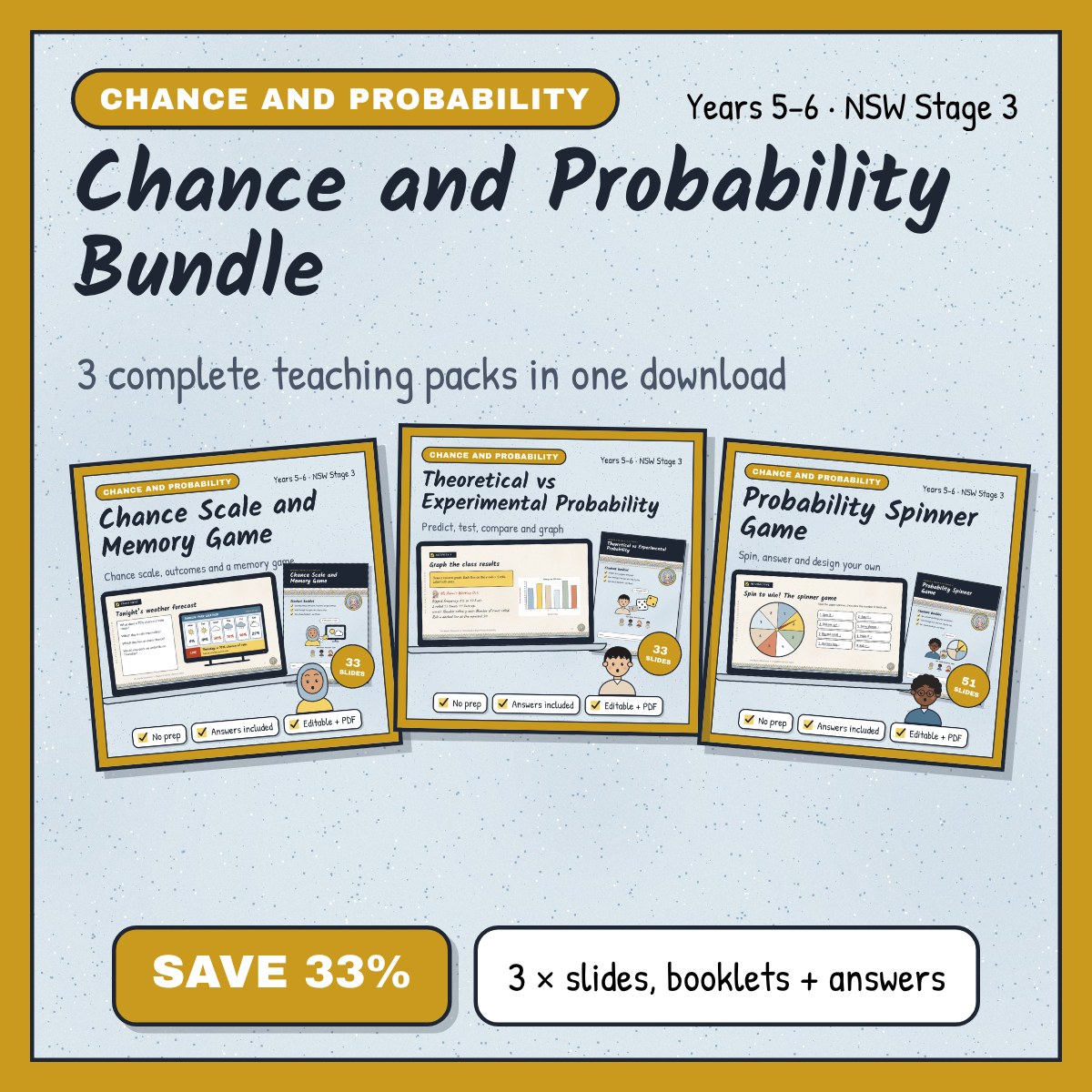
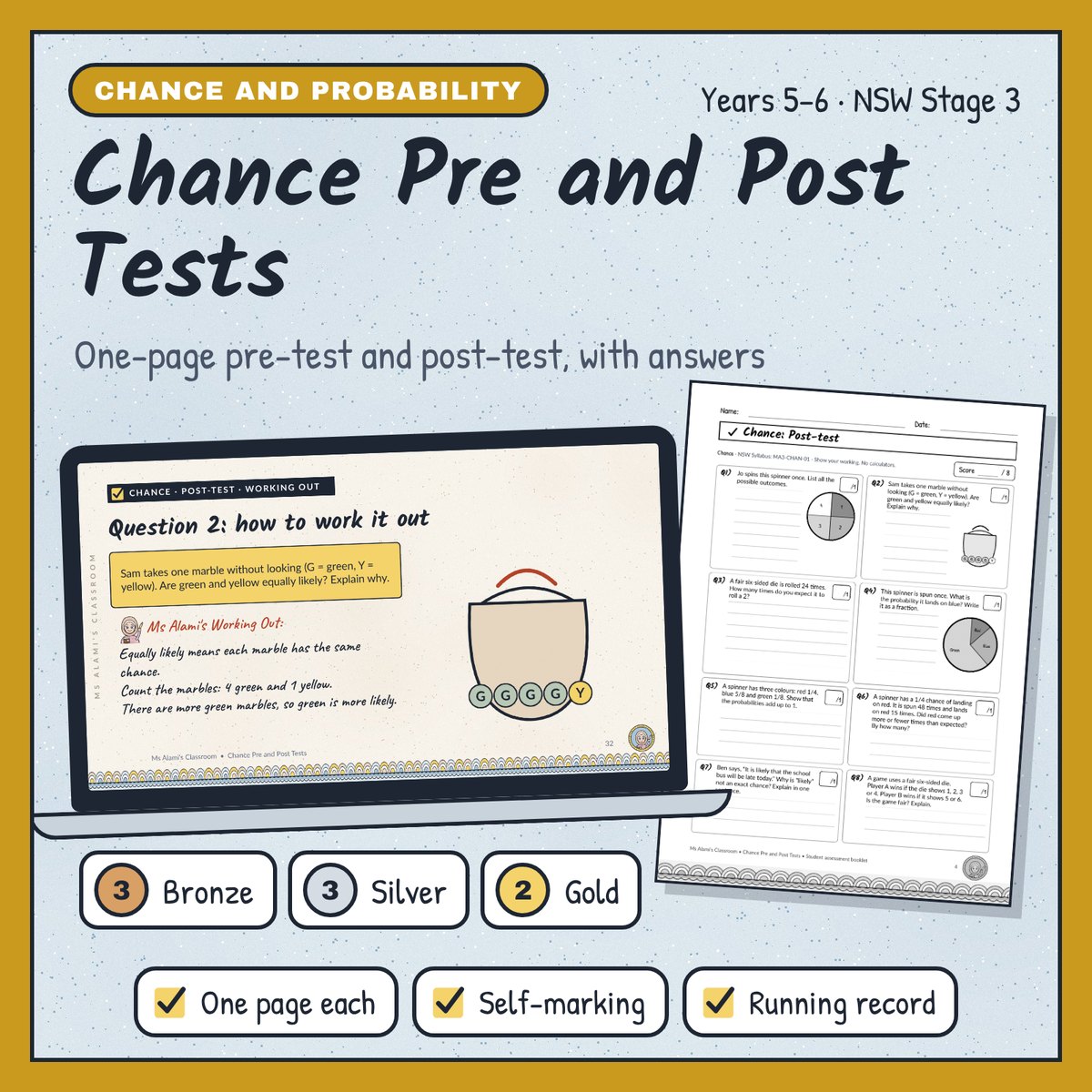
This is the order I teach chance in. Students describe chance with numbers instead of words, test their predictions with dice and spinners, and then review it all with a game. By the end they are designing their own random generators.
How it runs
Teach the three in order, or use the spinner game on its own as a review. Together they give you 117 teacher slides and 46 booklet pages.
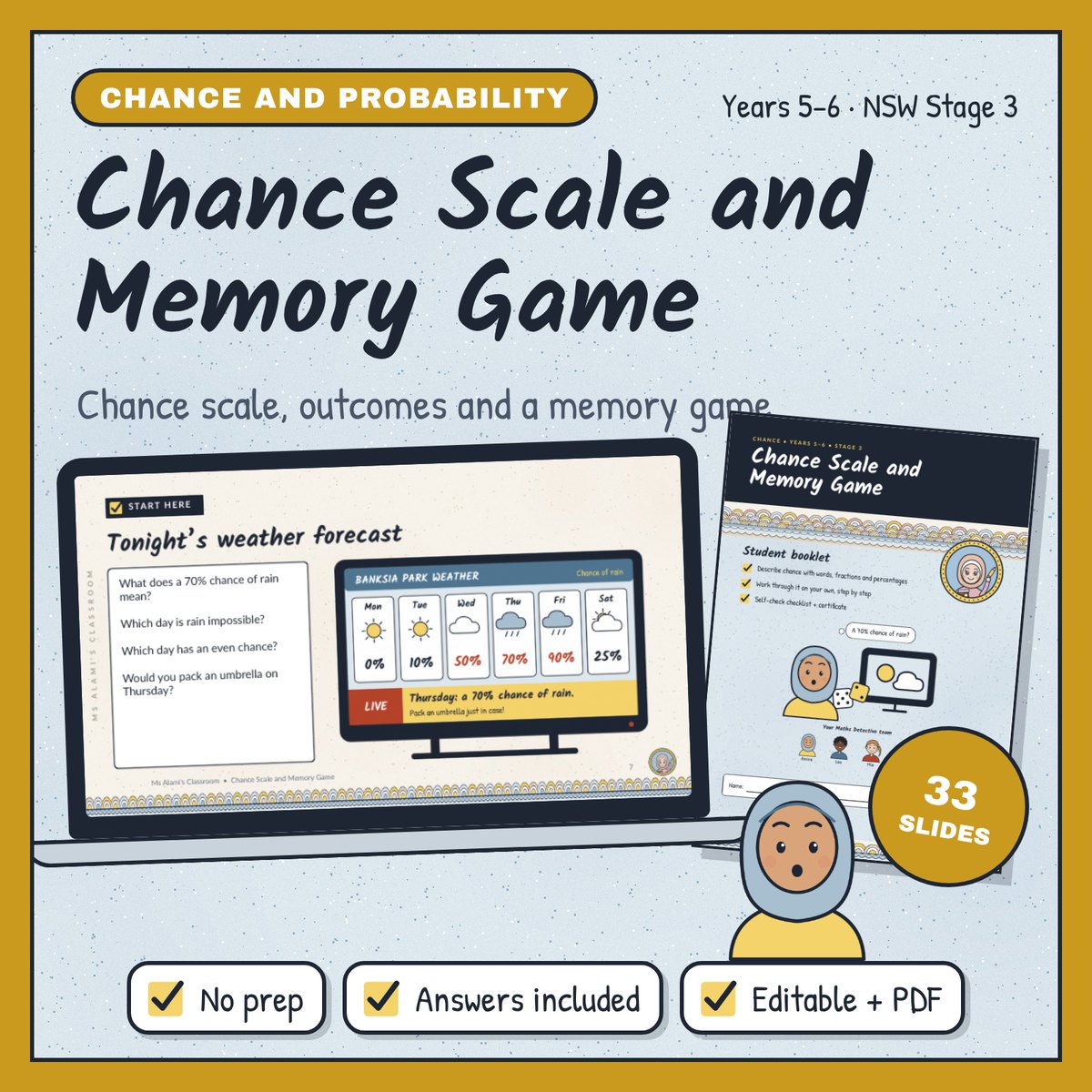
- Chance Scale and Memory Game: place events on a probability scale, list equally likely outcomes, write probabilities as fractions and finish with a memory game (33 slides, 15 pages).
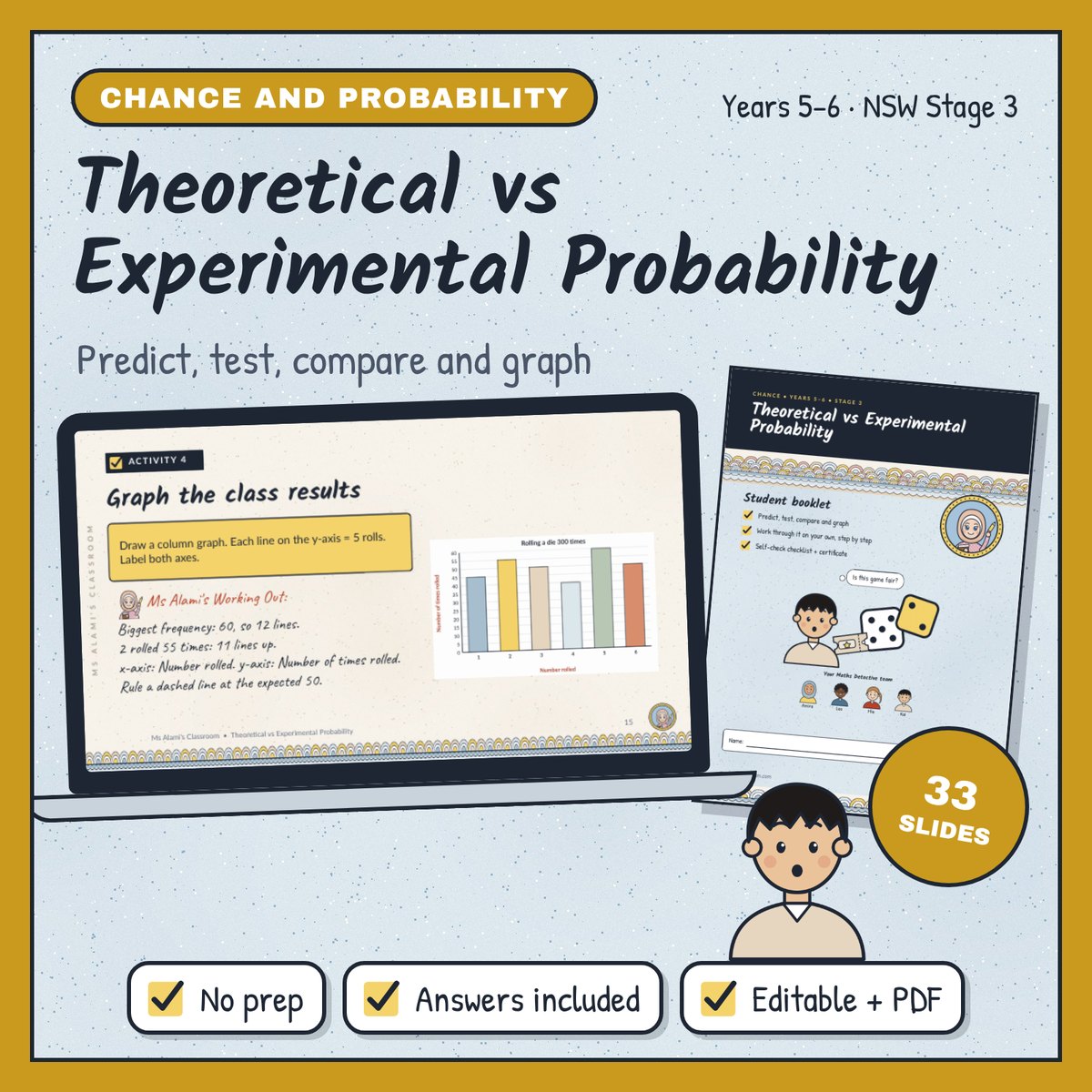
- Theoretical vs Experimental Probability: predict expected frequencies, roll and tally, pool class results and compare small and large numbers of trials (33 slides, 16 pages).
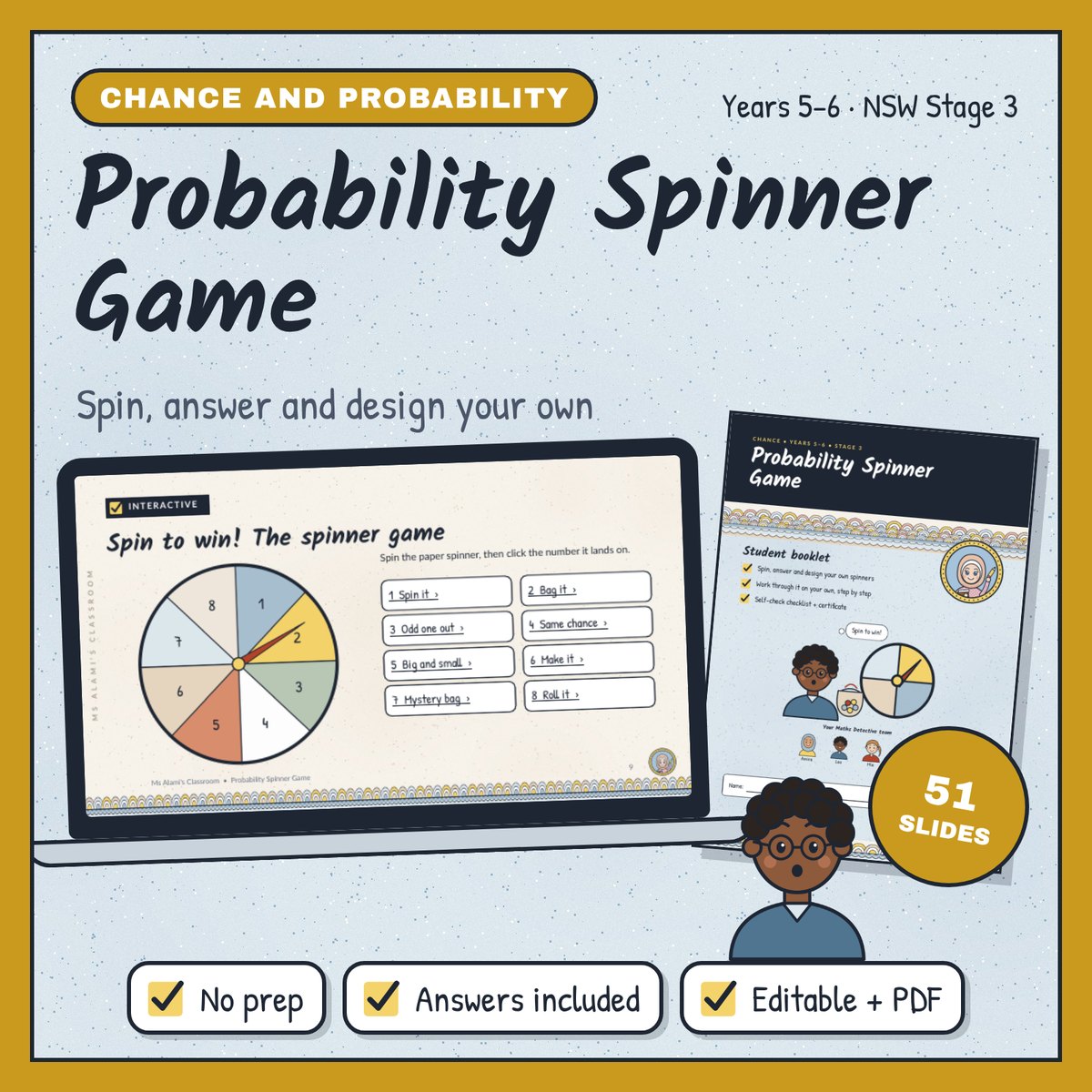
- Probability Spinner Game: a clickable spinner with questions on spinners, bags and dice, plus design-your-own spinners and a mystery bag (51 slides, 15 pages).
Maths covered
- MA3-CHAN-01: describe probabilities from 0 to 1 with fractions, decimals and percentages, list equally likely outcomes, compare expected and observed frequencies, design random generators and sample with replacement
- MA3-DATA-01: draw column graphs of class results with many-to-one scales
- Extension (Stage 4): the two-dice investigations, with a 6 × 6 outcome table and the term "sample space", are clearly labelled (MA4-PRO-C-01)
Good to know
- One download. Every pack has its own teacher slides with answers, colour and black and white booklets, editable PowerPoint booklets, a lesson plan, a detective case file, a "How did I go?" self-assessment page, a certificate, the Maths Detectives and Keynote fonts.
- The three packs cost $15 separately. The bundle is $10, a 33% saving.